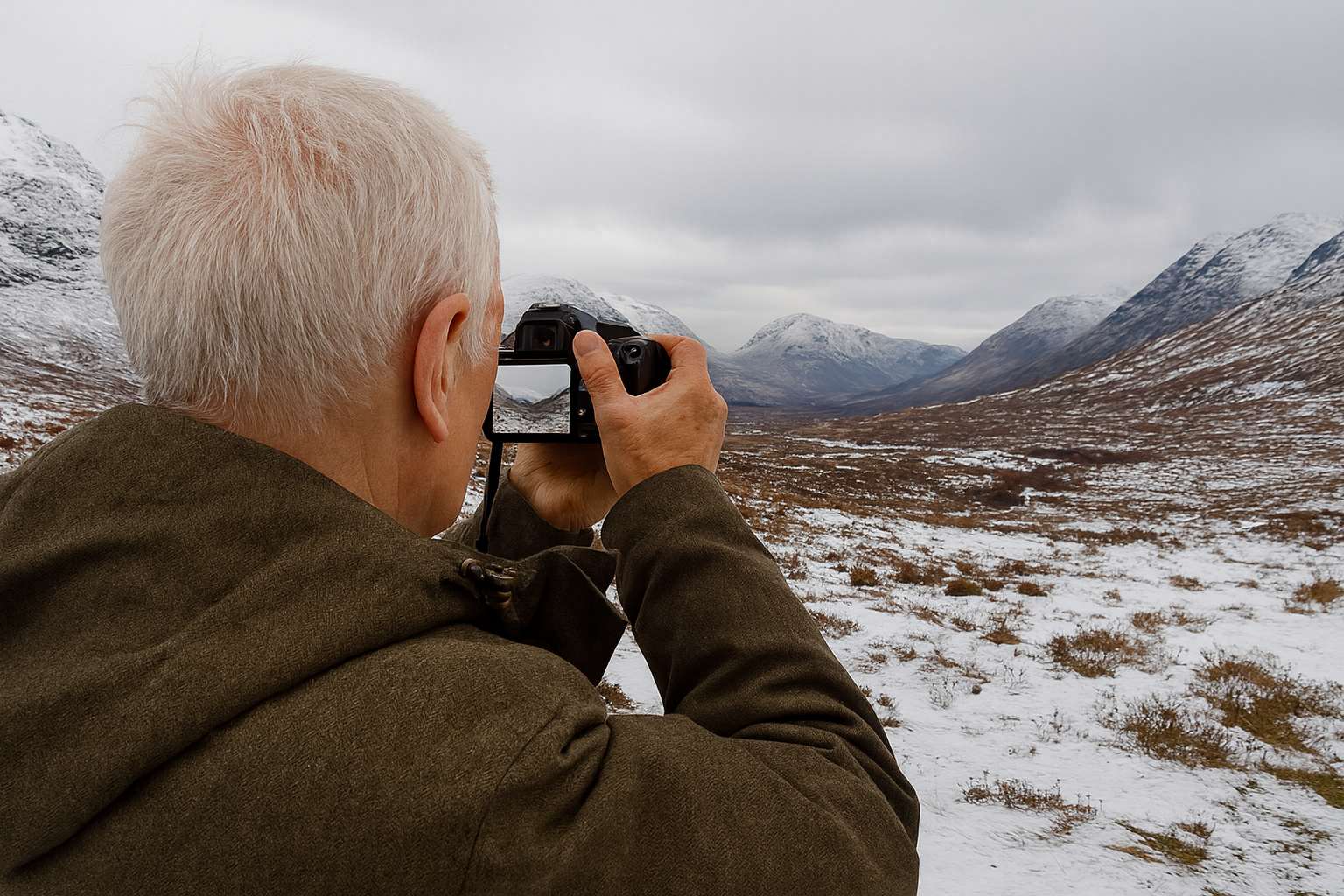
Photographs sometimes remember what we forget. Looking at these pictures, I first thought the day might have been in the Yorkshire Dales. Then I saw the great mountain range stretching ahead of my camera and realised it was Scotland.
I cannot now say exactly where in the Highlands I was. The photographs were taken about six years ago, probably in February, when the ground and mountains carried a good covering of snow.
The name of the place may have slipped away, but the pictures preserve the important parts: the cold, the open landscape, the camera and the simple satisfaction of being properly equipped for a winter day outdoors.
The location has faded from memory. The feeling of being there has not.
Out with the camera
Photography has always given me another reason to go outside. A walk is never merely a journey from one point to another when you carry a camera. You begin looking more carefully at light, weather, shape and distance.
Snow simplifies a landscape. Familiar colours disappear beneath white, tracks become more obvious and the mountains seem to rise more sharply from the valley. Even an overcast sky has character when it hangs low over snow-covered ground.
In the photographs, I am concentrating on the view through the camera while the weather closes in around me. There is a particular pleasure in trying to frame a landscape that is far too large to be contained in any photograph.
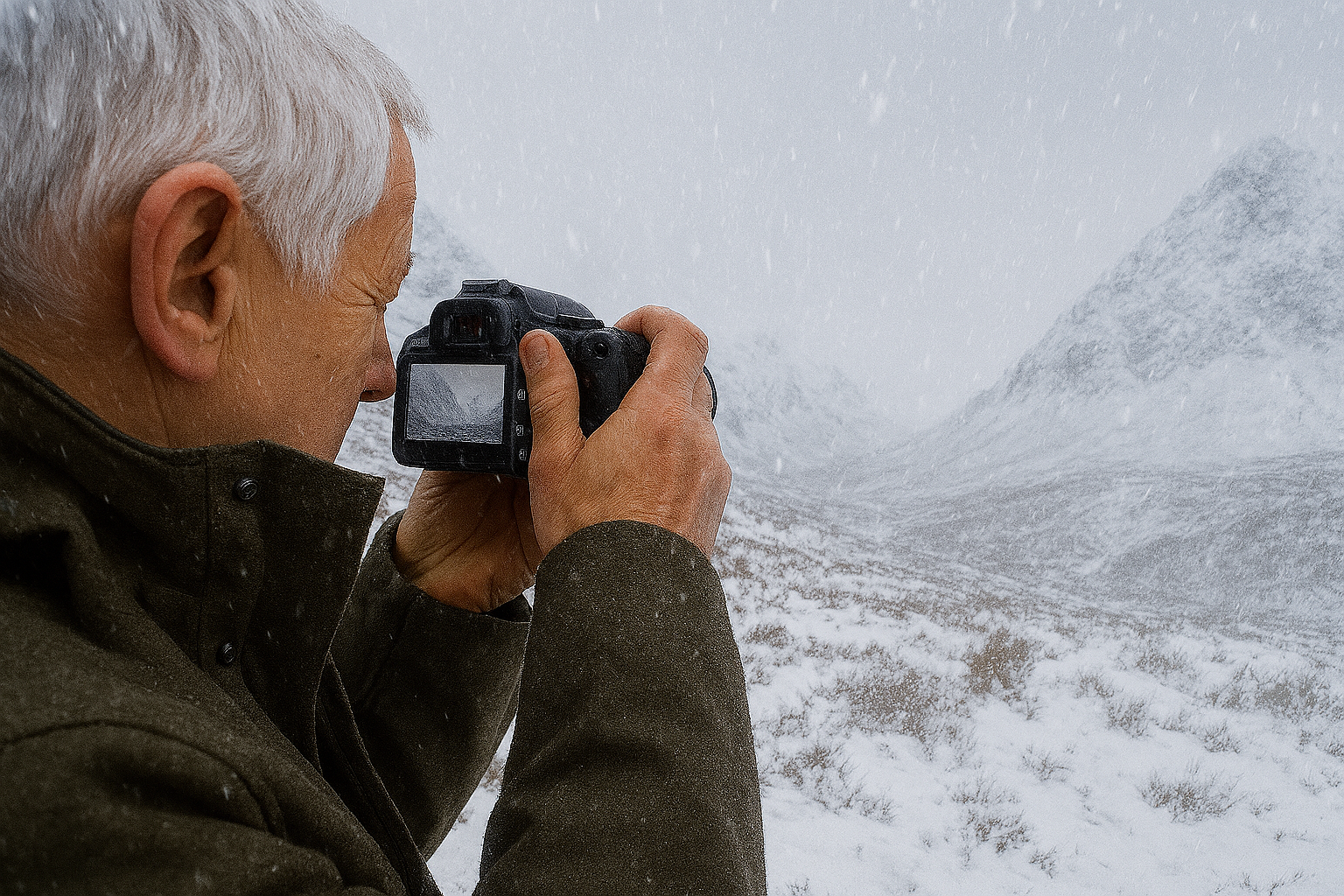
Skills are meant to be practised
I was not there only to take photographs. I also carried the equipment needed to practise some of my outdoor skills.
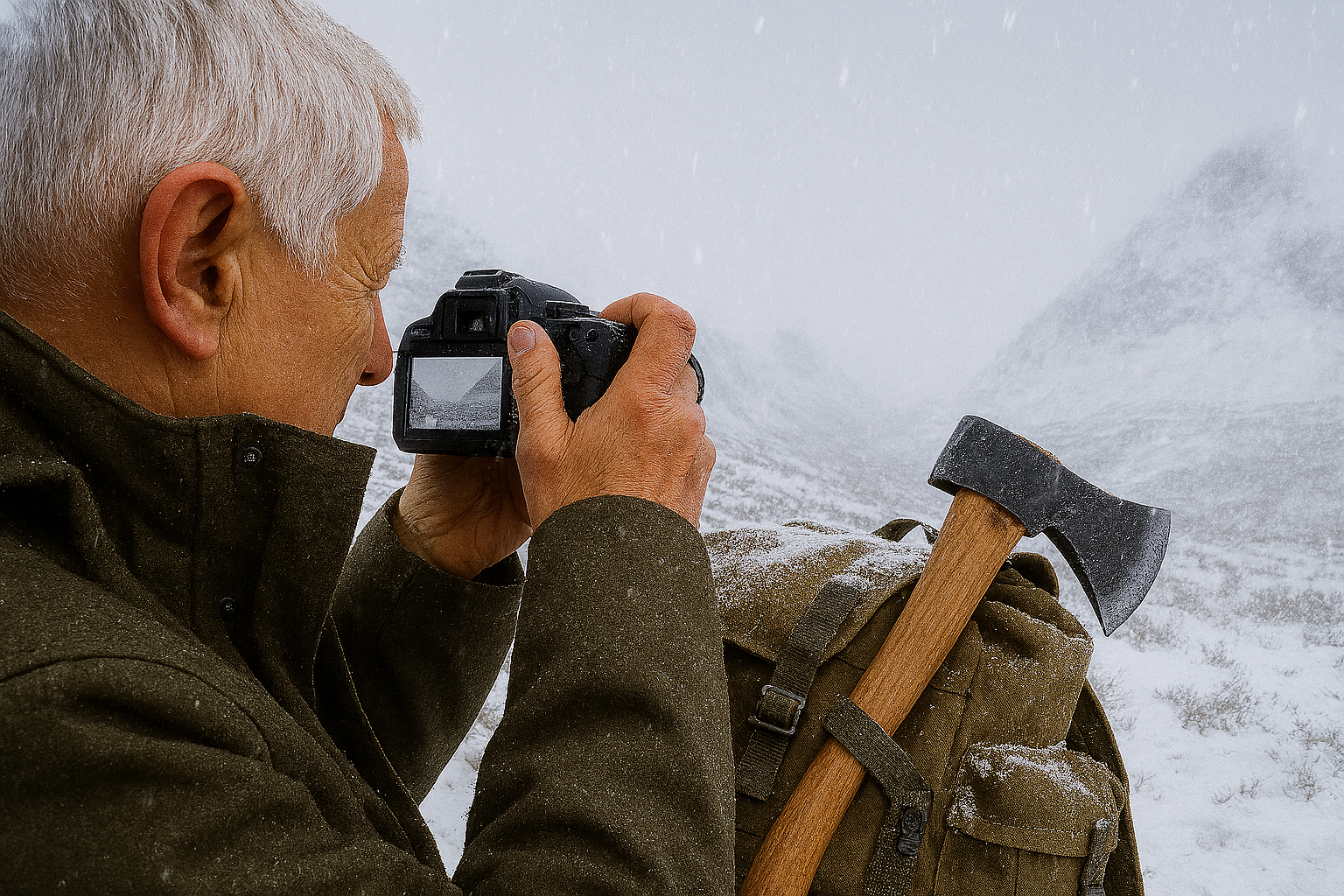
My rucksack held a firebox, and an axe was attached securely to the outside. The plan was wonderfully uncomplicated: find a suitable place, use the firebox safely and make myself a brew.
Anybody can make tea in a kitchen. Making one outside in winter is different. You have to think about the weather, the ground, fuel, safety and how you will leave the place afterwards.
None of this was about pretending to survive in a wilderness. It was about remaining familiar with useful skills and enjoying the quiet confidence that comes from knowing how your equipment works.
Outdoor skills are easily forgotten when they are only read about or watched on a screen. The best way to learn is to use them, patiently and responsibly, in real conditions.
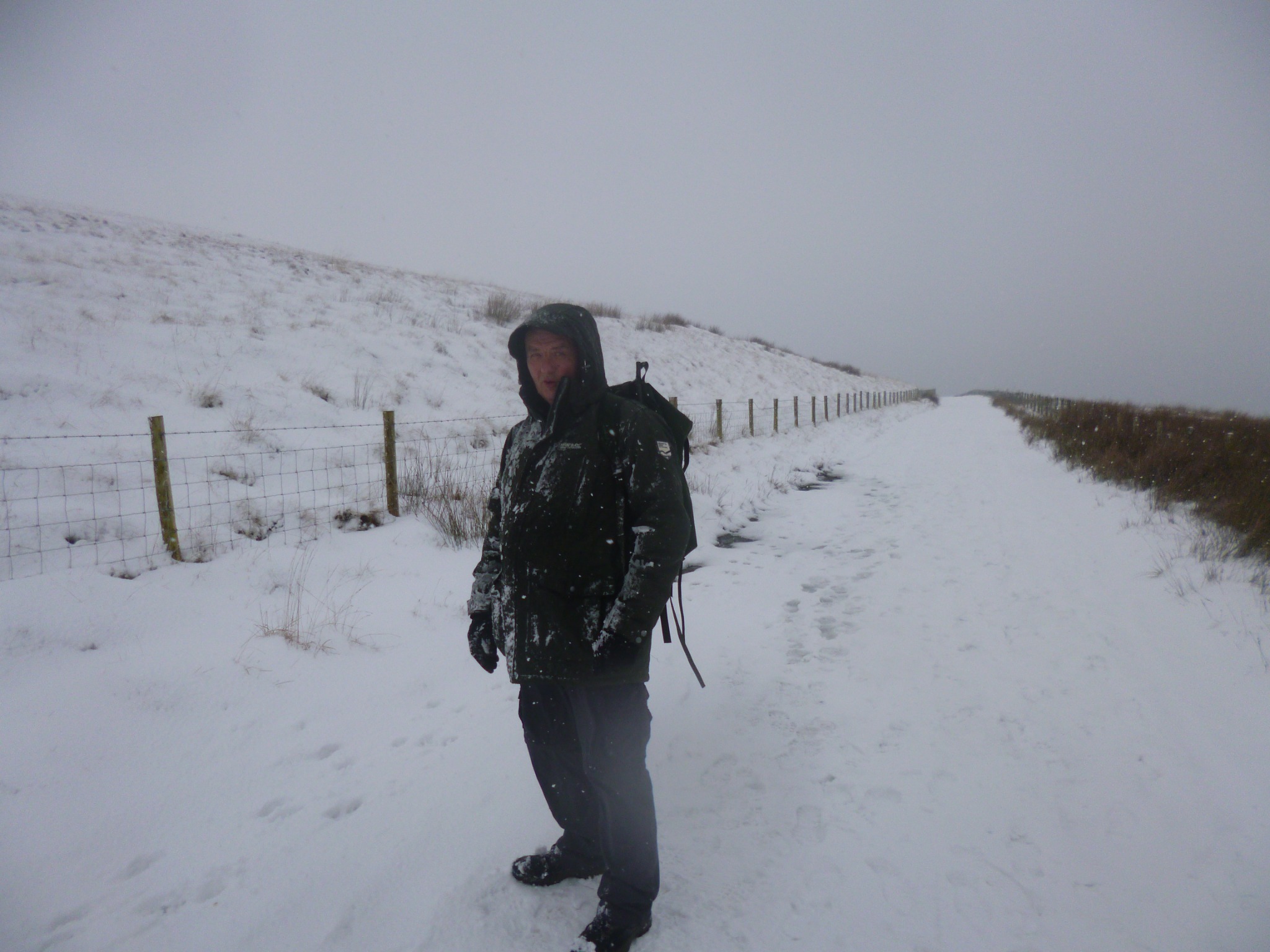
The importance of a brew
A brew outdoors is never just a drink. It provides a reason to stop, take off the rucksack and look properly at where you are.
There is no kettle clicking off automatically and no central heating waiting nearby. The preparation is part of the pleasure. The warmth of the mug matters because your hands and face know how cold the day is.
These small rituals are among the things I value most about being outdoors. They slow life down. For a while, there is nothing to do except prepare the brew, watch the weather and appreciate the fact that you made the effort to be there.
It need not be a heroic expedition. It is enough to leave the familiar behind for a few hours and test yourself against something real: cold air, snow underfoot and the practical business of looking after yourself.
A brew made outdoors tastes of the effort it took to get there.
What was stolen—and what remained
Some time after that winter day, my shed was broken into. The rucksack seen in the photographs was stolen, along with the axe and several other belongings.
It was upsetting, particularly because outdoor equipment often carries memories as well as monetary value. A familiar rucksack is not simply a bag. It has accompanied you through places and conditions that other people may never know about.
But possessions can only hold the memory; they do not own it.
Whoever took that rucksack acquired some equipment. They did not acquire the winter morning, the mountain view, the photographs or the satisfaction of making a hot brew in the snow.
Those things remained mine—and these images have brought them back once again.
The pictures know the way
I may never remember precisely where these photographs were taken. That uncertainty does not diminish them.
In some ways, it makes them more representative of all the days I have spent outdoors: places reached, weather experienced, skills practised and moments appreciated without knowing that one day I would look back on them.
The equipment in the photographs has gone. Six years have passed. I am older now, and I approach the hills with a different understanding of my limits.
But the man behind the camera is still recognisably me—curious, prepared and happier for being outside.
Perhaps that is why we take photographs. They do not merely show us where we have been.
They remind us who we were while we were there.