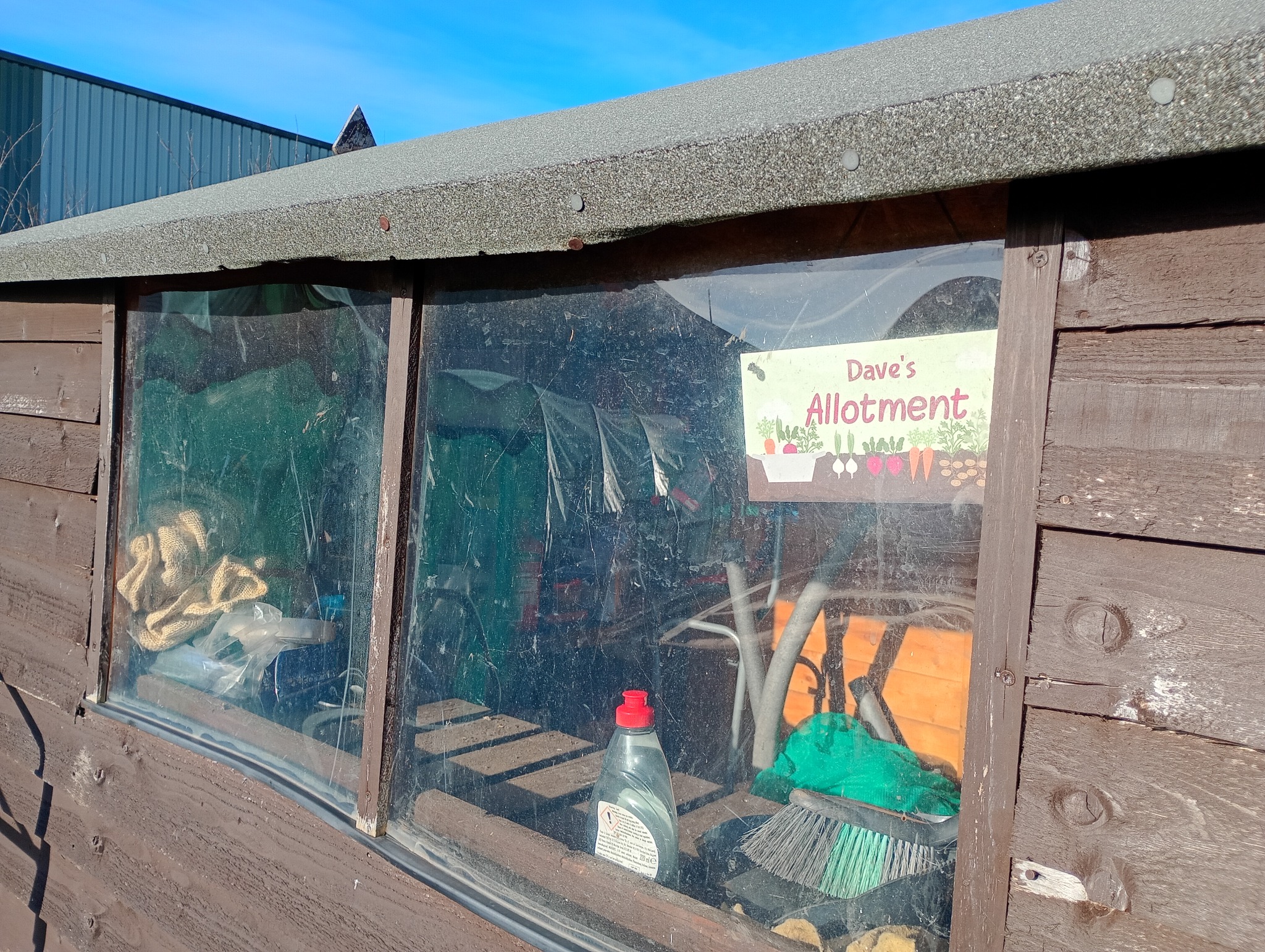
The sign on the shed says “Dave's Allotment.” It is a simple little sign, but it means more to me than merely marking whose tools are inside.
An allotment is one of those places that can look quite ordinary from the outside. There are sheds, beds, canes, pots, bags of compost and various objects kept because they might become useful one day. Nothing is polished, and very little stays clean for long.
Yet every plot carries something of the person who looks after it. Some are immaculate and measured to the inch. Others are a little more relaxed. Mine is a working place: somewhere to grow things, make plans, solve small problems and occasionally sit down with a brew.
The allotment gives me enough work to feel useful and enough peace to remember that I don't always have to be busy.
A place with my name on it
For much of adult life, our days belong partly to other people. There are shifts, deadlines, responsibilities and problems that cannot be ignored simply because the weather is pleasant.
Retirement changes that. Time becomes your own, but it still needs some shape. Too much structure can feel like recreating the job you left behind; too little can allow the days to merge into one another.
The allotment sits somewhere comfortably in the middle. It gives me somewhere to go and something worthwhile to do, but nobody is standing over me with a timetable. If the weather turns, the job can wait. If I decide I have done enough, I can put down the tools and make a drink.
That shed is part workshop, part storeroom and part evidence of all the small jobs that make up an allotment year. The window is not there to impress anyone. The brushes, bottles, bags and tools are there because they are used.
And the sign makes the place unmistakably mine—not in the sense of shutting everybody else out, but as a corner of the world that reflects my effort and choices.
The work before anything grows
People tend to notice an allotment when it is at its most impressive: rows of vegetables, climbing beans, tomatoes ripening and produce ready to take home.
But the growing season begins long before any of that can be seen.
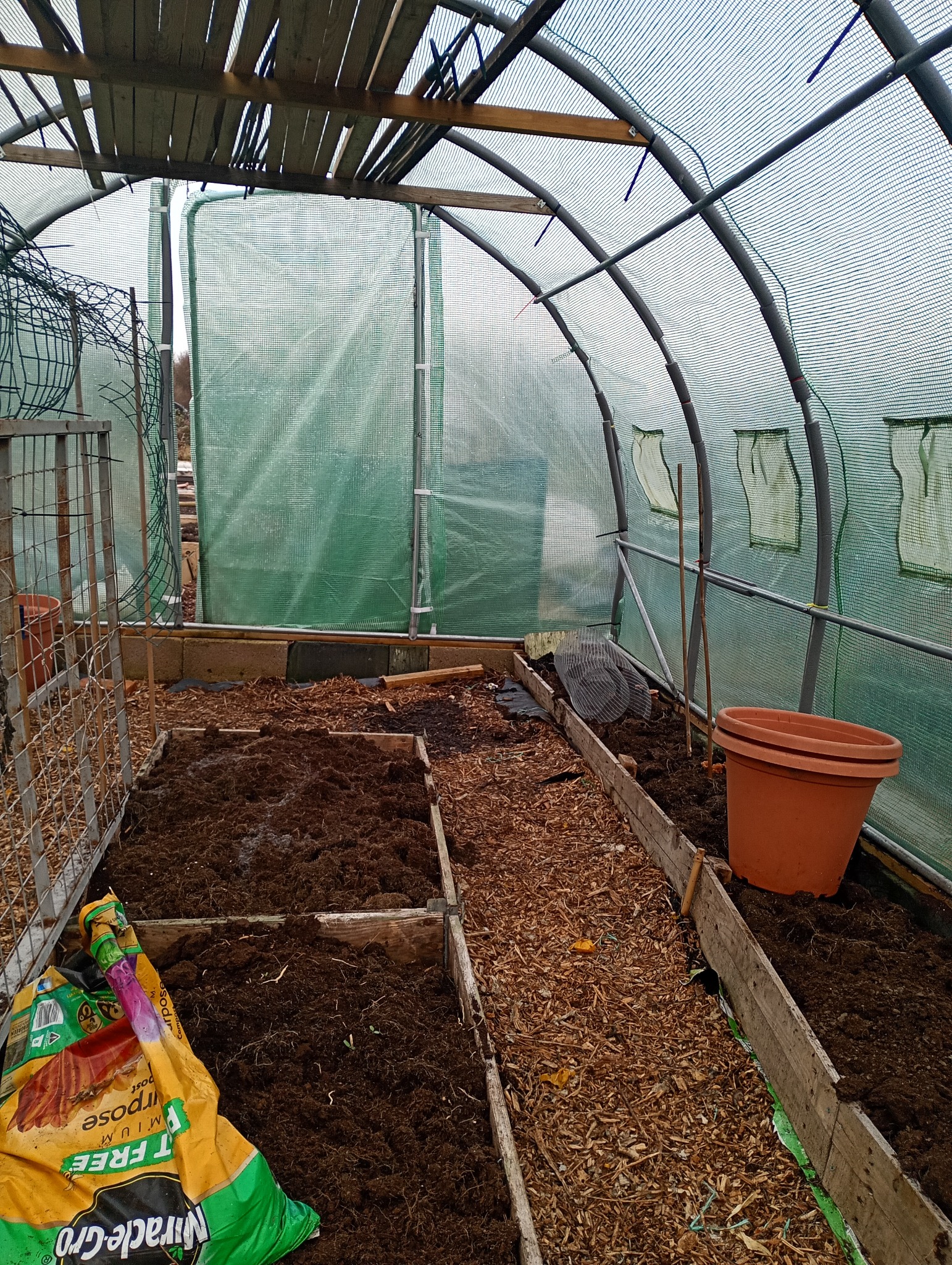
Inside the large polytunnel, the beds have been prepared and the paths covered. At first glance, it may appear that nothing is happening. There are no dramatic displays and no basket of produce to photograph.
In reality, this is one of the most important stages.
The ground has to be made ready. Space has to be organised. You think about what might go where, what worked previously and what you might try differently. There is optimism in an empty, well-prepared bed because it contains every possibility of the season ahead.
Gardening is often described as relaxing, but that does not mean it requires no effort. Soil must be moved, weeds removed, structures repaired and countless small tasks completed before a single seed rewards you.
There are also failures. Seeds do not always germinate. Weather refuses to cooperate. Something may thrive one year and struggle the next. Advice confidently offered by another gardener may work perfectly for them and not at all for you.
The allotment teaches patience because nature cannot be hurried to suit our timetable.
Preparation is an act of faith: you do the work now because you believe something worthwhile will grow later.
Still learning
One of the pleasures of an allotment is that nobody ever completely finishes learning.
However many seasons you experience, the next one will bring something different. The temperature changes, rain arrives at the wrong time, a pest discovers your favourite crop or an experiment succeeds far better than expected.
That uncertainty keeps the mind engaged. You observe, make a judgement and see what happens. If it fails, you try to understand why. If it succeeds, you remember what you did—while knowing that nature may still produce a different answer next year.
I enjoy having knowledge, but I have never believed that age means you have nothing left to learn. The allotment is a useful defence against that idea. It rewards experience while continuing to challenge certainty.
The importance of the brew
Not every worthwhile moment on an allotment involves digging, planting or harvesting.
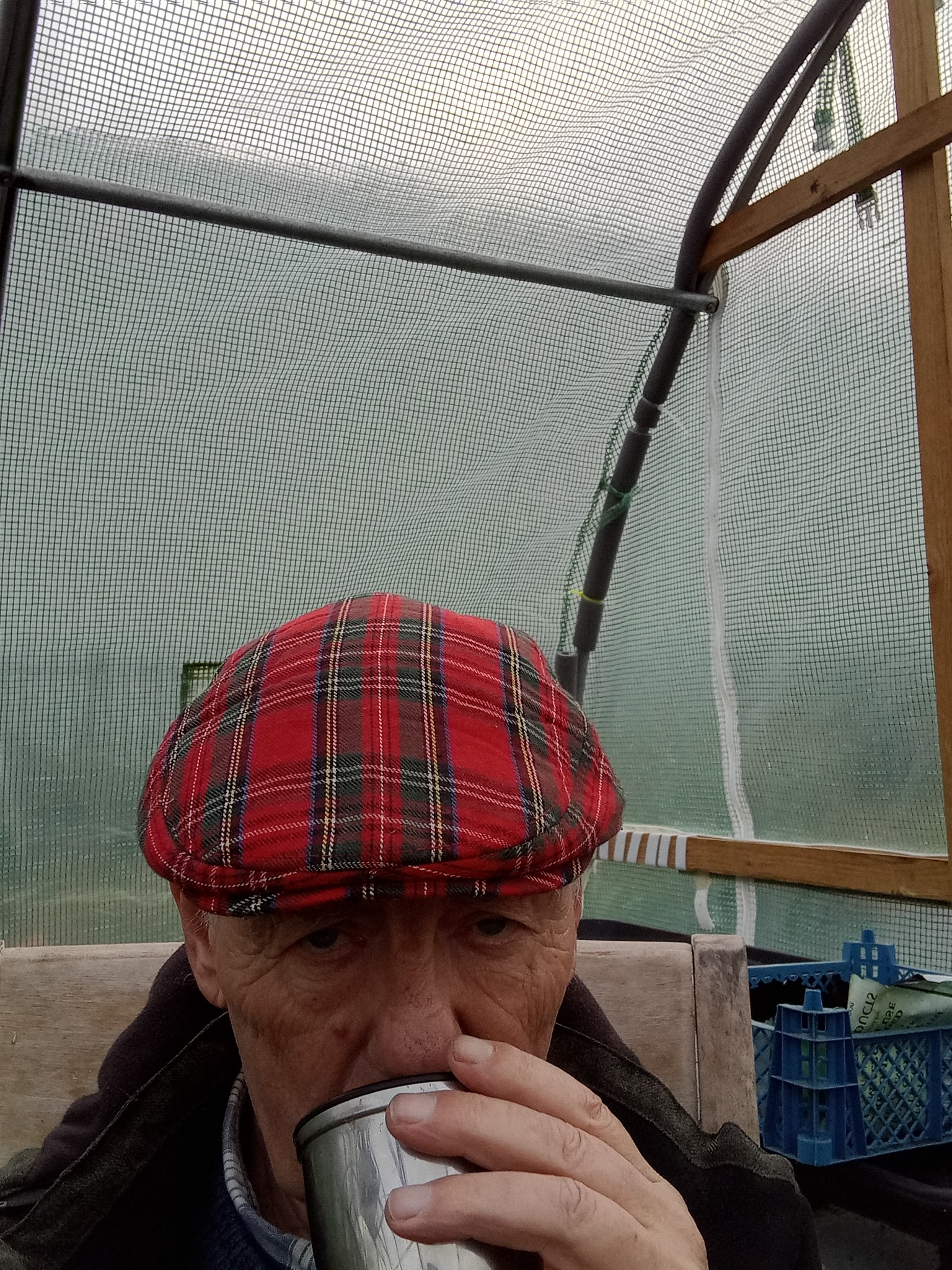
Sometimes the best part is sitting in the polytunnel with a hot drink, looking at what has been done and deciding that the next job can wait for ten minutes.
During my working life, a break was fitted around the demands of the day. Now I can stop because I choose to stop. That small difference is one of the freedoms of retirement.
A brew also creates the space to think. The allotment may be close to home, but it provides a change of surroundings and a different pace. Problems often look less urgent when you are sitting beneath the curved roof of a polytunnel listening to the weather outside.
I enjoy my own company, and the allotment allows for that. It also brings contact with other people. Conversations happen over fences, advice is exchanged, produce is offered and the usual mixture of personalities appears—as it does in every small community.
But the central relationship remains between the plot and the person tending it. The work is honest. Either you prepared the ground or you did not. Either something grew or it did not. Nature is not interested in status, appearances or who had the loudest opinion.
More than vegetables
Of course, the purpose of an allotment is to grow food. There is real satisfaction in taking home something that began as a seed and became part of a meal because you looked after it.
But an allotment grows other things as well.
It grows routine without rigidity. It grows patience, practical judgement and an acceptance that not everything can be controlled. It gives physical work a purpose and provides a reason to notice the changing seasons.
It can turn an ordinary morning into something worthwhile without needing to turn it into an adventure.
Walking and camping take me away to hills, lakes and places filled with memories. The allotment offers a quieter form of the same balance. It gets me outdoors, gives me room to think and reminds me that a good life is often built from simple things done regularly.
A shed with my name on it. Ground ready for a new season. A brew in my hand. Sometimes that is more than enough.
The polytunnel will not remain empty. The prepared beds will fill, the season will move forward and there will be successes and disappointments.
That is part of the pleasure.
The allotment is never truly finished, and perhaps neither are we. There is always another season to prepare for, another idea to try and something new to learn.